Passion for the team
In a dynamic social, cultural, and business environment, the People and Culture teams at Aleatica focus their efforts on improving working conditions, developing talent, fostering innovation, and mitigating risks related to employee attraction, retention, and well-being, thereby contributing to the sustainability of the business.
It currently compiles data and experiences related to recruitment and selection, enabling us to make more informed decisions aligned with the context of each Business Unit.
Our team
2022
2023
2024
2025
No Data Found
2025 recruitment and turnover
509 new hires
In 2025, we had 376 staff departures.
In 2025, our absenteeism rate was 2%, which equates to 134,915 hours.
Our Employee Value Proposition (Vive)
Reflecting our commitment to strengthening emotional and professional connections, in 2025 we launched our Vive Strategy, the overarching framework that integrates and drives our employee value proposition. This strategy is built on four pillars:
Your Recognition
Your Evolution
Your Identity
Your Purpose
Work -Life balance
Merit
Compensation
Development
Empowerment
Empathy
Diversity and inclusion
Connection
Innovation
Environmental Sustainability
Social Sustainability
Work-life balance
Key initiatives include on-site physical therapy and nutrition, a hybrid work model, a wellness circuit, an emotional support line, online workshops, health campaigns, and a monthly self-care calendar.
In Mexico, 534 employees took advantage of the nine annual days of paid personal leave. In 2025, 95 employees took parental leave (40 men and 39 women); 85 remain active after their leave period.
Parental leave
Primary caregiver:
12 weeks. Article 170 of the Federal Labour Law (LFT) grants female employees six weeks of paid leave before childbirth and six weeks after.
Non-primary caregiver:
1 week. Article 132, section XXVII Bis, requires the employer to grant 5 working days of paid leave for the birth or adoption of a child, equivalent to one working week.
Aleatica provides breastfeeding facilities or benefits at its Mexico City premises.
Building the best team
2023
2024
2025
No Data Found
training hours
training hours
No Data Found
No Data Found
Performance review
In 2025, we conducted comprehensive reviews of
employees, measuring their achievement of shared and individual objectives, as well as their competencies.
Reviews by gender
183
Executives reviewed
443
Middle management employees reviewed
518
Administrative/operational staff employees reviewed
No Data Found
Providing the best place to work
We value the well-being of our team members as the driving force behind our success as a company, committed to everyone who makes it what it is.
Aleatica Balance
We ensure the holistic wellbeing of all our team members through the In-spire Model, which focuses on five key dimensions:
Spiritual wellbeing
Physical wellbeing
Intellectual wellbeing
Relational wellbeing
Emotional wellbeing
We cultivate emotional awareness and provide tools for effective emotion management.
Benefits and remuneration
We are committed to offering competitive pay, as well as benefits that exceed the legal requirements applicable to our various Business Units. Through these practices, we remain an employer that recognises and values the work of our team, boosting their satisfaction and motivation to achieve our business and sustainability goals.
We conduct an annual review and update of our pay scales, which enables us to establish remuneration structures that are as equitable and fair as possible.
Additionally, we have a variable remuneration plan that provides a short-term, annual, non-guaranteed financial incentive, subject to meeting the following conditions:
Shared objectives
Supporting the achievement of the business’s strategic goals within a specific timeframe, with measurable indicators aligned to the Aleatica pillars, the fulfilment of which depends on a collective effort. Some of these include:
- Staff safety performance indicator.
- Performance indicator for customer safety.
- Carbon emissions
- Complaints
- Improved work environment.
- Budget compliance (OpEx).
- Major maintenance.
Individual objectives
Leadership competency model
Organisational Climate Survey
In 2025, we achieved an 87% participation rate (vs. 75% in 2024, which was a test run or pulse). The results show a positive trend in both Commitment (I want to) and Empowerment (I can).
Commitment (I want to)
76
2022 Pulse
74
2023 Survey
78
2024 Pulse
79
2025 Survey
Empowerment (I can)
71
2022 Pulse
71
2023 Survey
76
2024 Pulse
78
2025 Survey
No Data Found
Labour practices
Aleatica has an explicit commitment of its own, extending even to its supply chain, to freedom of association and the right to collective bargaining, formalised in two public Group policies approved by the Board of Directors:
The Human Resources Policy (RHS-POLI-02, 2020) and the Human Rights Policy (DSA-POLI-09, 2023).
Both apply to all companies under Aleatica’s control.
Human Resources Policy (RHS-POLI-02, 2020)
Establishes as a guiding principle that “the right to association and collective bargaining in the workplace must be respected and promoted regardless of local regulations”, and commits to “actively promote the right of workers to associate and bargain collectively, through proactive engagement with trade unions and workers’ associations”.
Human Rights Policy (DSA-POLI-09, 2023)
Reinforces this commitment by pledging “not to interfere in the free and voluntary membership of its workers in lawful trade union organisations, nor to adopt discriminatory measures on that basis”. This principle is also reiterated in the Code of Ethics and Conduct, where “trade union activity” is expressly listed as a category protected against any form of discrimination. In addition, the Human Rights Policy prohibits child and forced labour at all levels of operations.
This regulatory commitment translates into specific operational evidence reported in 2025:
1,262 employees, equivalent to 44% of the Group’s total workforce, are covered by collective bargaining agreements
The Company maintains an active dialogue with trade union representatives, particularly on the setting of remuneration conditions and in consultation processes on workplace changes (such as the consultation period with the Works Council in Spain). Aleatica identifies “employees and trade unions” as a stakeholder group with explicit expectations regarding freedom of association, and reports its performance in line with the GRI 2-29 (stakeholder engagement) and GRI 2-30 (collective bargaining agreements) disclosures, as well as with the fundamental ILO conventions on this matter.
Collective bargaining agreements
Metric
2022
2023
2024
2025
Percentage of employees represented by an independent trade union or covered by collective bargaining agreements.
49.6%
47%
46%
44%
Medical services
We offer both in-house and third-party preventive medical services, centralised in Mexico City and Madrid. In Mexico, we have a medical coordination team, four occupational physicians, a nutritionist, three nurses, and implant physicians. In Spain, we have added physiotherapy, nutrition, stress management coaching, and Balance rooms. In Peru, we have an occupational physician and two nursing support staff.
|
Indicator
|
2023
|
2024
|
2025
|
|---|---|---|---|
|
Health campaigns
|
16
|
17
|
15
|
|
Global webinars
|
9
|
7
|
1
|
|
Seminar participants
|
571
|
486
|
426
|
Human capital management
Average annual training expenditure per employee
Indicator
2024
2025
Average annual training expenditure per employee (€)
325,953.49
215,717.44
Return on investment in human capital
Indicator
2022
2023
2024
2025
Net turnover (INCN)
(€ million)
1.089,4
1.437,4
1.614,9
1.505,7
Operating expenses
(€ million)
648,63
720,95
813,11
649,55
Personnel expenses
(€ million)
87,09
105,34
118,02
122,13
HC ROI
6.06x
7.80x
7.79x
8.01x
In 2025, we achieved an HC ROI of 8.01x, compared with 6.06x in 2022
A cumulative increase of 32.2%. Most of the improvement occurred in 2023, when the indicator rose from 6.06x to 7.80x. In 2024 it remained stable (7.79x), and in 2025 it grew by 2.8%.
Net turnover (INCN) fell by 6.8% in 2025
From €1,614.9 million to €1,505.7 million. The decrease is explained by lower construction revenue, which we record under IFRIC 12. Excluding this revenue, INCN grew by 3.6%, from €1,149 million to €1,190.3 million.
The numerator of the HC ROI is INCN minus operating expenses other than personnel costs.
In 2025 it rose by 6.4%, from €919.81 million to €978.31 million. Non-personnel expenses fell by 24.1%, from €695.09 million to €527.43 million. The decrease was greater than that of INCN. Procurement costs fell by 25.0% and other operating expenses by 21.3%. The reduction in procurement costs is consistent with the lower level of construction activity. Because personnel expenses grew less than the numerator (+3.5%), the HC ROI rose by 2.8%.
Our operating profit fell by 3.4%, from €2,325.28 million to €2,246.35 million.
This figure exceeds INCN because it includes other operating income. In 2025 this amounted to €1,491.9 million, 7.1% less than in 2024. This income is not part of the HC ROI calculation.
We maintained our investment in our team.
Personnel expenses grew by 3.5% in 2025, from €118.02 million to €122.13 million. The workforce increased by 3.4%, from 2,793 to 2,888 people. Personnel cost per employee remained stable, from €42.25 thousand to €42.29 thousand. It had risen every year since 2022, when it stood at €35.52 thousand.
We present the HC ROI alongside revenue per employee to avoid a reading based on individual efficiency.
Our revenue per employee grew between 2022 and 2024, from €444.3 thousand to €578.2 thousand. In 2025 it fell by 9.8%, to €521.4 thousand. That year the workforce grew and INCN fell. Excluding construction revenue, revenue per employee barely changed: from €411.4 thousand to €412.2 thousand. For this reason, we do not interpret the improvement in the HC ROI as an increase in our team’s productivity.
Atenea Programme
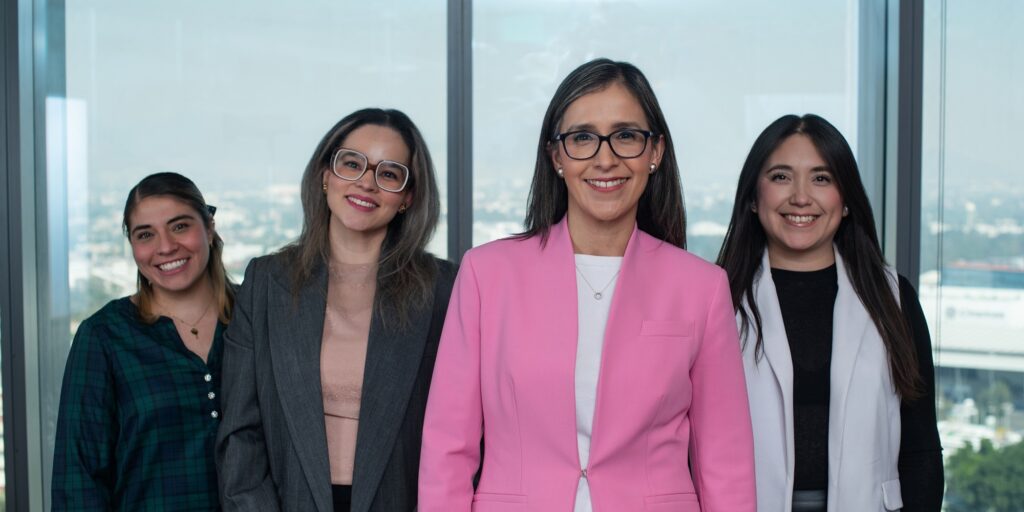
This is Aleatica’s organisational transformation initiative, designed to evolve into a more agile, efficient, collaborative and people-centred company. The project, developed with the participation of more than 150 employees and an international consultancy, entails a restructuring that includes new corporate departments reporting directly to the CEO, the simplification of processes to focus on value-generating activities, and the adoption of advanced technological tools, such as artificial intelligence. The transformation will be implemented in phases over a 12-month period, initially focusing on the corporate sphere in order to strengthen internal talent and reinforce a high-performance culture.
As part of this restructuring, we supported the people whose positions were eliminated and paid them the corresponding severance in accordance with applicable regulations, seeking to ensure that their departure was orderly, respectful and responsible. In parallel, we began a planning process for digital transformation, the purpose of which is to help our employees adapt to new tools, processes and technologies. In this way, they will be able to make full use of them to gain efficiency and productivity and to contribute to the organisation’s transformation objectives.